



This article describes early, experimental research. CAR-NK therapy for lupus is not an approved treatment and is not a replacement for standard care. Nothing here suggests that WellNest offers it. Please do not change your treatment without speaking to your rheumatologist.
Imagine living for a decade with an immune system designed to protect you but which has learned to attack you instead.
That is the paradox of systemic lupus erythematosus (SLE).
For patients with severe lupus, the disease can move far beyond fatigue, joint pain or skin symptoms. The immune system can attack the kidneys, blood, nervous system and other organs. Treatment therefore often becomes a long exercise in controlling an immune response that has forgotten where the enemy ends and the patient begins.
Now imagine something different.
Instead of continuously suppressing that malfunctioning immune system, what if medicine could attempt to rebuild part of it?
That is the idea being tested in one of the more closely watched recent developments in cellular medicine.
Patients who had already tried conventional treatment
The story begins in China with a group of 18 adults enrolled in a first-in-human study of an experimental cellular therapy.
They were not newly diagnosed patients looking for an alternative to conventional treatment.
They had relapsed or refractory lupus with moderate-to-severe disease activity. The median participant had lived with lupus for 10.5 years. Every participant had previously received at least two standard systemic therapies. Fourteen of the 18 had already received biologic treatments including belimumab or telitacicept.
Seventeen were women. Their median age was just 37.5.
Consider what those statistics mean at a human level.
To picture what those numbers mean, imagine a hypothetical patient. She is not a real person from the study: she stands in for someone who has spent much of her adult life moving through cycles of treatment, improvement and recurrence.
Researchers then tried a different approach.
They weren’t simply going to add another drug.
They were going to introduce engineered natural killer cells.
Teaching a natural killer cell where to look
Natural killer or NK cells are among the body’s innate immune defenders.
Unlike adaptive immune cells that generally develop highly specific recognition, NK cells possess an extraordinary natural ability to identify abnormal or distressed cells and destroy them.
Researchers have begun asking whether that biological machinery can be engineered.
The cells used in this study were modified with a chimeric antigen receptor, creating CAR-NK cells designed to recognise CD19.
Why CD19?
Because CD19 is expressed across much of the B-cell lineage. B cells are essential components of normal immunity, but dysfunctional B-cell populations also play a central role in lupus, including the production and support of disease-driving autoantibodies.
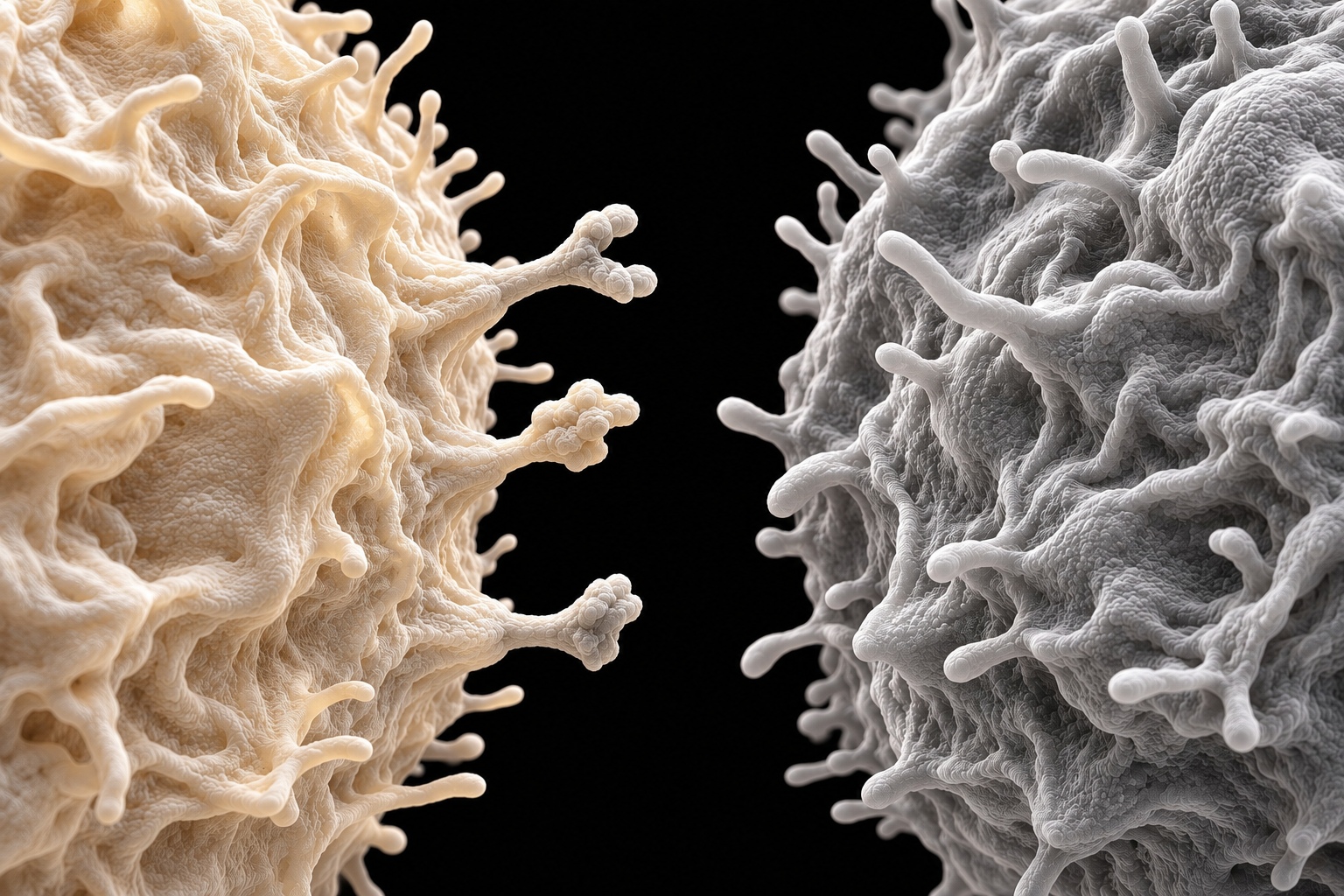
B-cell-directed CAR-NK approaches remain experimental. Conceptual illustration; simplified, not to scale, and not a treatment outcome.
The hypothesis is this:
Remove the pathological B-cell population deeply enough, allow the immune system to rebuild it, and perhaps what returns will behave differently.
That would mean something other than lifelong suppression.
The idea is sometimes called an immune reset, but that is a hypothesis under study, not an established result.
What the researchers reported
Participants first underwent lymphodepleting conditioning with fludarabine and cyclophosphamide. They subsequently received three infusions of allogeneic CD19-directed CAR-NK cells during one treatment cycle.
CAR-based therapies can produce serious complications, so safety and tolerability were the study’s primary endpoints.
Among all 18 participants, one developed grade 1 cytokine-release syndrome.
Researchers reported no neurotoxicity, no other severe adverse events attributed to CAR-NK therapy and no dose-limiting toxicities. That statement concerns the CAR-NK cells. It does not mean the whole regimen, which included chemotherapy, carried no serious risks.
But safety was only the first question.
The longer-term outcomes raised the next question.
Nine participants had been followed for more than 12 months when the results were reported.
Six of those nine (67%) had achieved both DORIS remission and lupus low disease activity state.
Those are not marketing terms.
Lupus low disease activity state (LLDAS) is a recognised clinical treatment target representing sustained control of disease activity under defined conditions.
DORIS remission sets an even more demanding framework for defining remission in systemic lupus erythematosus.
For six people living with difficult-to-treat lupus, both thresholds had been reached.
What these results do and do not show
There is an important difference between saying someone feels better and saying that a patient meets a scientifically defined threshold for remission.
That distinction matters enormously.
For our hypothetical patient, the point is not the novelty of the therapy.
It is what researchers measured afterwards.
Patients whose disease had persisted despite multiple systemic therapies entered a study designed to deplete B cells and to see what happened as those cells returned.
Some met remission criteria at the time of reporting. That is not the same as a cure.
That leads to the next question.
What happens when the B cells come back?
The ambition behind B-cell-directed cellular therapy is not permanent immune destruction. Researchers are investigating whether profound depletion can be followed by immune reconstitution with a healthier, more naïve B-cell population.
A separate 2026 phase 1 study involving five patients with refractory lupus adds to this picture. All five achieved LLDAS by month nine, while four of five met remission criteria by their last follow-up, at a median of 12 months. Researchers reported that the reconstituted B-cell population was predominantly naïve.
That is interesting, but five patients cannot show a lasting immune reset.
This is where excitement needs discipline
The original study involved only 18 patients.
There was no randomised control group.
Only nine had exceeded 12 months of follow-up at publication.
The treatment required lymphodepleting chemotherapy before CAR-NK administration.
And CAR-NK therapy for lupus remains experimental, not an established treatment patients should substitute for standard rheumatological care.
We therefore cannot conclude that CAR-NK cells cure lupus.
We cannot yet know how durable these remissions will prove over many years.
We cannot know from this study alone how CAR-NK compares with modern standard therapy or with emerging CAR-T approaches.
The two are different. CAR-T studies in lupus have generally used a patient’s own T cells, while this study used CAR-NK cells that were not made from the patient’s own cells. The authors suggest this could help with manufacturing and access, but that has not been shown in a comparison between the two.
And we certainly cannot extrapolate these results to generic commercial “NK-cell therapies”. The treatment studied was a specifically manufactured, genetically engineered CD19-directed allogeneic CAR-NK cellular product delivered within a clinical trial.
Those distinctions protect patients.
Why this research matters
For decades, much of autoimmune medicine has understandably focused on controlling the immune system.
Cellular medicine is beginning to ask a further question:
Can part of it be rebuilt?
The most important part of this story may not be that six patients met remission criteria.
It may be that researchers are testing whether a chronically malfunctioning immune system always has to be managed in essentially the same state.
We do not yet know whether CAR-NK therapy will fulfil that promise, or whether these responses will last.
For now, this remains early evidence from small studies, and larger controlled trials are needed.
Evidence behind this story
The principal study was a first-in-human, open-label, single-arm case series of 18 patients with relapsed or refractory SLE, published in The Lancet. Of nine participants followed beyond 12 months, six (67%) achieved both DORIS remission and LLDAS. One participant experienced grade 1 cytokine-release syndrome; investigators reported no neurotoxicity, no other CAR-NK-related severe adverse events and no dose-limiting toxicities.
A separate 2026 phase 1 study of five patients receiving low-dose cord-blood-derived CD19 CAR-NK cells found that all five reached LLDAS by month nine and four met remission criteria by last follow-up.
WellNest’s aim is to treat early evidence as early evidence, rather than as established clinical practice.
This article is educational thought leadership and does not constitute medical advice. CAR-NK therapy for systemic lupus erythematosus remains investigational.