
You know that feeling when a friend recommends something with way too much enthusiasm and you smile and nod but inside you are thinking: Is this actually real, or is this just a very convincing Instagram story?
That is what collagen tanning felt like for a lot of Cape Town when it first started doing the rounds. One too many Camps Bay influencers glowing from within and calling it a lifestyle. Fair enough scepticism.
But here is the thing. The science behind it is legitimate, the technology is not new, and once you understand what is actually happening in a collagen tan session, the whole conversation shifts.
First, Let Us Clear Up the Biggest Myth
All tanning beds are the same…
No, they are absolutely not.
Modern collagen tanning systems combine low-intensity, controlled UV exposure with red light therapy technology. That is a fundamentally different thing from a traditional commercial tanning bed running at maximum UV output. Different technology. Different intention. Different effect on your skin.
The distinction matters, which is why we are here.
What Is a Collagen Tan Can, Actually
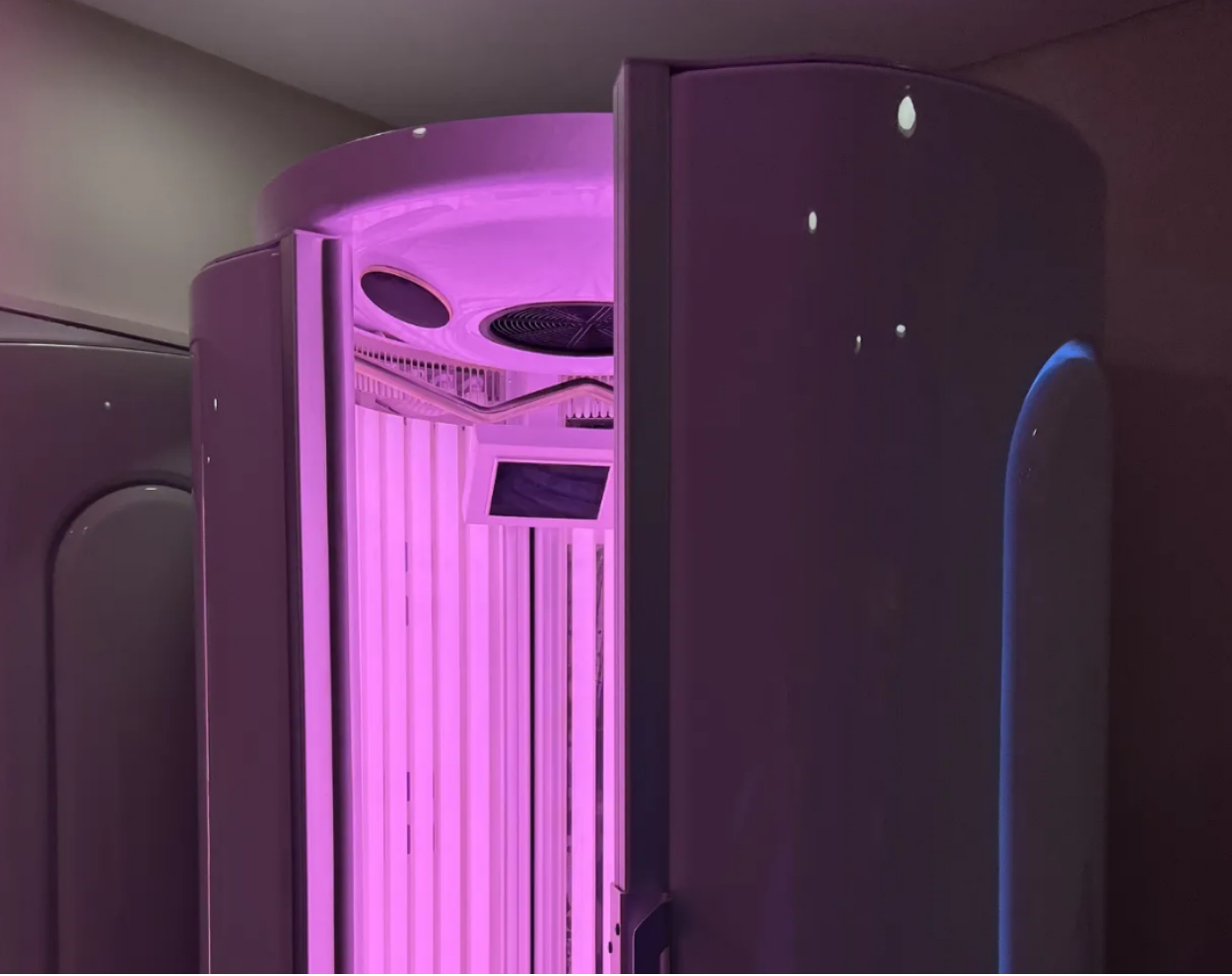
A collagen tan can is a tanning system built around two types of lights working together.
☀ UVA Light Low-intensity ultraviolet A Triggers melanin production for a gradual, natural-looking tan at a fraction of traditional sunbed output. | 🔴 Red Light 630nm to 850nm wavelength range Penetrates deep into skin. Stimulates fibroblasts to produce collagen and elastin, supporting cellular repair. |
Low-intensity UVA (ultraviolet A) light, which triggers melanin production in your skin. This is what produces the tan. The output is calibrated far below what a traditional sunbed emits, so the tanning process is gradual and controlled rather than aggressive.
Red light, emitted by specialised collagen bulbs at wavelengths in the 630nm to 850nm range. These penetrate deeper into the skin than UV. At these wavelengths, light interacts with mitochondria in your skin cells and stimulates a process that produces collagen and elastin, improves circulation, and supports cellular repair.[1]
One session. Two things happening. That is the difference.
Where red light sits on the light spectrum

The shaded range (630nm to 850nm) is where collagen-stimulating wavelengths sit. [1]
The Benefits (The Actual Ones, Not the Vague Ones)
Collagen stimulation and skin health
Collagen is the protein that keeps skin firm, bouncy, and looking like it belongs to someone who sleeps well and does not live in stress. Your body produces it naturally, but from around your mid-twenties, it starts declining by roughly 1% per year. By 40, that adds up.
Collagen production relative to your 25-year-old baseline

Approximate figures based on dermatological research. Individual variation applies. [2]
Red light at the wavelengths used in collagen tanning has been shown in peer-reviewed research to stimulate fibroblast activity, which is the cellular process that produces collagen. Consistent sessions over time contribute to:[3]
Improved skin texture and firmness
Reduced appearance of fine lines
Better skin elasticity and bounce
More even skin tone over time
A gradual, natural-looking tan
Lower UV output means the tan builds slowly rather than aggressively. The result looks more natural than a traditional sunbed tan and fades more evenly. No raccoon eyes, no patchy fade. Just a consistent base throughout your collagen experience.
Mood and mental well-being
Red light therapy has a solid body of research behind it when it comes to mood support, serotonin regulation, and reduced inflammation. Most people come out of a session feeling noticeably better than when they went in. Given that Cape Town winters can get surprisingly gloomy despite what everyone expects, that benefit is not trivial.[4]
Recovery support for people who train
Near-infrared wavelengths have been studied extensively in the context of muscle recovery and inflammation reduction. For the Sea Point runners, the gym crowd in Silo, or anyone whose body is regularly under physical stress, a collagen tan session fits naturally into a recovery routine.[5]
Controlled vitamin D production
UV exposure supports vitamin D synthesis. The controlled, low-intensity approach means you are getting a physiological benefit without the overexposure risk that comes with traditional high-output UV.

What Collagen Tanning Is Not
Honesty is part of how we do things. So here is the real version:
It is not risk-free. It involves UV, and UV carries risk. Certain skin types, medical histories, and medications require professional guidance before any UV-based treatment.
It does not replace sun protection. Lower UV output does not mean skin care stops being relevant. SPF (sun protection factor) when heading outdoors remains non-negotiable.
It is not a once-off transformation. The skin health benefits build cumulatively. Think gym, not haircut.
It is not for everyone. Anyone with very fair skin, a history of skin cancer, or photosensitivity conditions should consult a professional or a WellNest Clinician first.
Who Is It For
Honestly, it suits a wide range of people:
People who want a gradual, natural-looking tan without the harshness of a traditional sunbed
People interested in skin health who want their tanning sessions to actually do something useful
Regular gym-goers or athletes looking for recovery support that also has an aesthetic benefit
Anyone who wants an experience that does more than one thing and leaves them feeling genuinely restored
Across Cape Town, from the Waterfront to the Southern Suburbs, the approach is the same: come in with clean skin, leave feeling better than you did. A clinic worth going to will do a proper intake before your first session and tailor your protocol to your skin type.
What to Expect in a Session

Sessions run between 10 and 20 minutes, depending on your skin type
Protective eyewear is provided and non-negotiable
Arrive with clean skin, no heavy products or oils, and exfoliate the day before if possible
The environment is warm, and the red light has a noticeably calming quality
Most clients report feeling genuinely relaxed by the end
See what a collagen tan can session looks like at WellNest
Want to know how collagen tanning compares to spray tan, or get the full picture on UV risks and why controlled tanning is a different conversation entirely? Both are on the blog.
FAQ
Is collagen tanning the same as red light therapy?
They overlap but are not the same thing. Collagen tanning uses low-intensity UV alongside red light wavelengths. Standalone red light therapy uses no UV at all. They share some benefits but are distinct treatments.
How many sessions before I see results?
For the tan itself, most people notice visible colour after two to three sessions. For skin texture and firmness, benefits build cumulatively over weeks. Two to three sessions per week initially, followed by maintenance, is a common starting protocol.
How long does a collagen tan can tan last?
Between seven and fourteen days on average, depending on your skin type and how well you maintain hydration. Regular sessions help maintain a consistent base.
Is collagen tanning safe?
It is a lower-risk option than traditional high-intensity UV tanning beds, but it is not without consideration. It involves UV, and certain skin types and medical histories require professional guidance first. Any reputable clinic will screen new clients properly.
What should I wear or bring?
Clean skin, no products. Protective eyewear will be provided. What you wear during the session is personal preference. Covered areas will not tan.