



By Thomas Pays | WellNest
Scientists are teaching immune cells to recognise some of the cells that help a tumour grow. A study published in September 2026 shows progress, alongside a challenge that still needs solving.
If you or someone you love is living with lung cancer, a headline about a new treatment can bring hope and questions at the same time. Has it helped anyone yet? Could it apply to my cancer? How close is it to being available?
The study, from researchers at The University of Osaka [1] and published in Cancer Science on 20 September 2026, is worth understanding through those questions.
The team changed immune cells so they could recognise a marker on certain cells surrounding lung tumours. In laboratory dishes, the engineered immune cells killed their targets. In mice, they multiplied and were still present about five weeks later. But they did not clear those target cells inside the animals.
This was early research in cells and mice. No patients received the experimental treatment. Its value is in showing what researchers can now do, and what they still need to make work.
A tumour has a neighbourhood
We often picture cancer as a collection of cancer cells. A tumour also contains other cells and material around them. That surrounding environment can influence how the cancer grows and responds to treatment.
Some of its residents are called fibroblasts. These are cells that normally help maintain and repair tissue. Around a tumour, some fibroblasts can take on roles that help cancer grow or make it harder for the immune system to act.
Think of it as a neighbourhood: what happens in one building can be affected by the activity around it. Scientists are investigating whether changing parts of the tumour's neighbourhood could help cancer treatment.
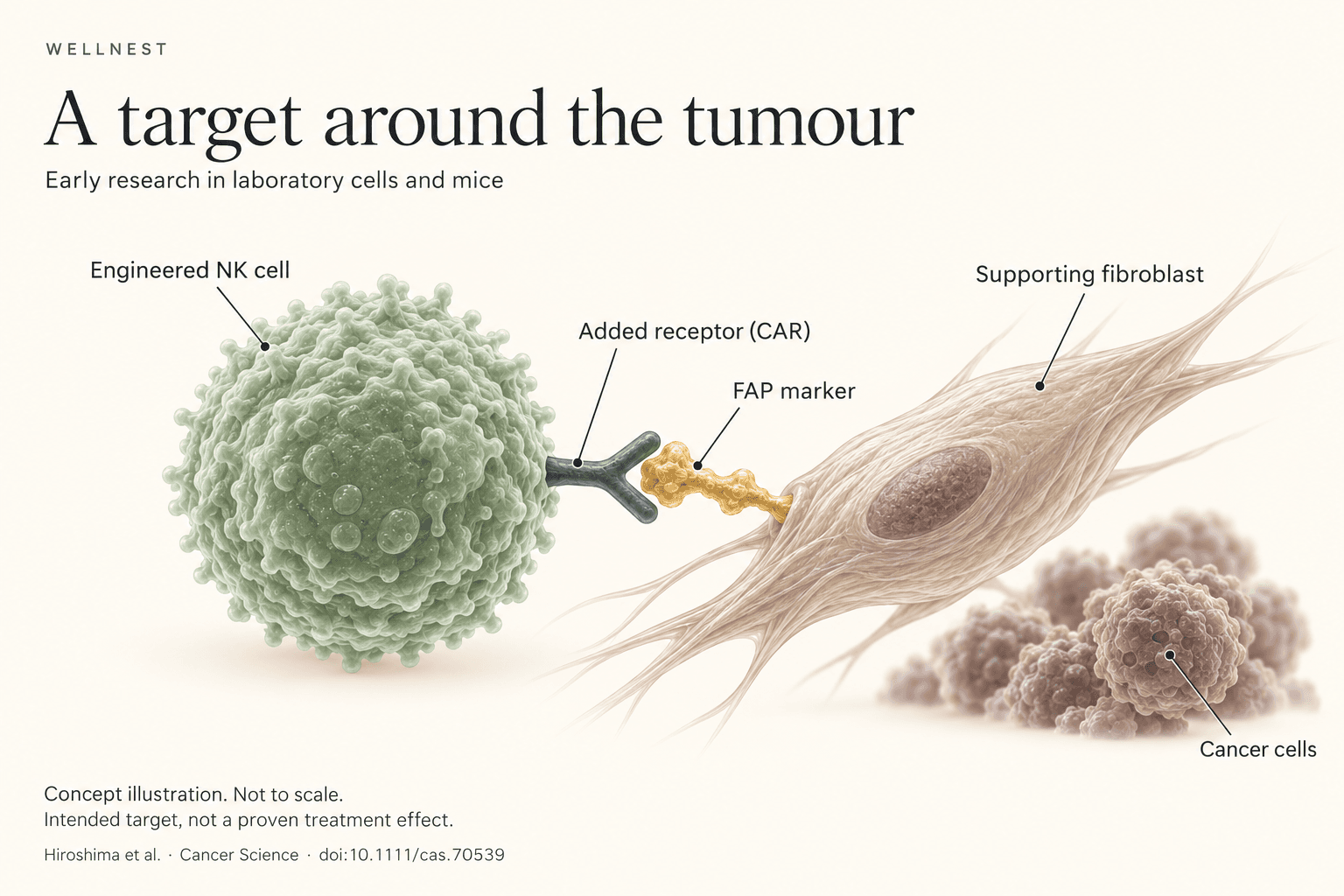
This study focused on a protein called FAP, short for fibroblast activation protein. FAP can sit on the surface of certain tumour-associated fibroblasts, giving researchers something to recognise and target. The idea is to reach some of the support around a tumour. It does not mean that every fibroblast is harmful or should be removed.
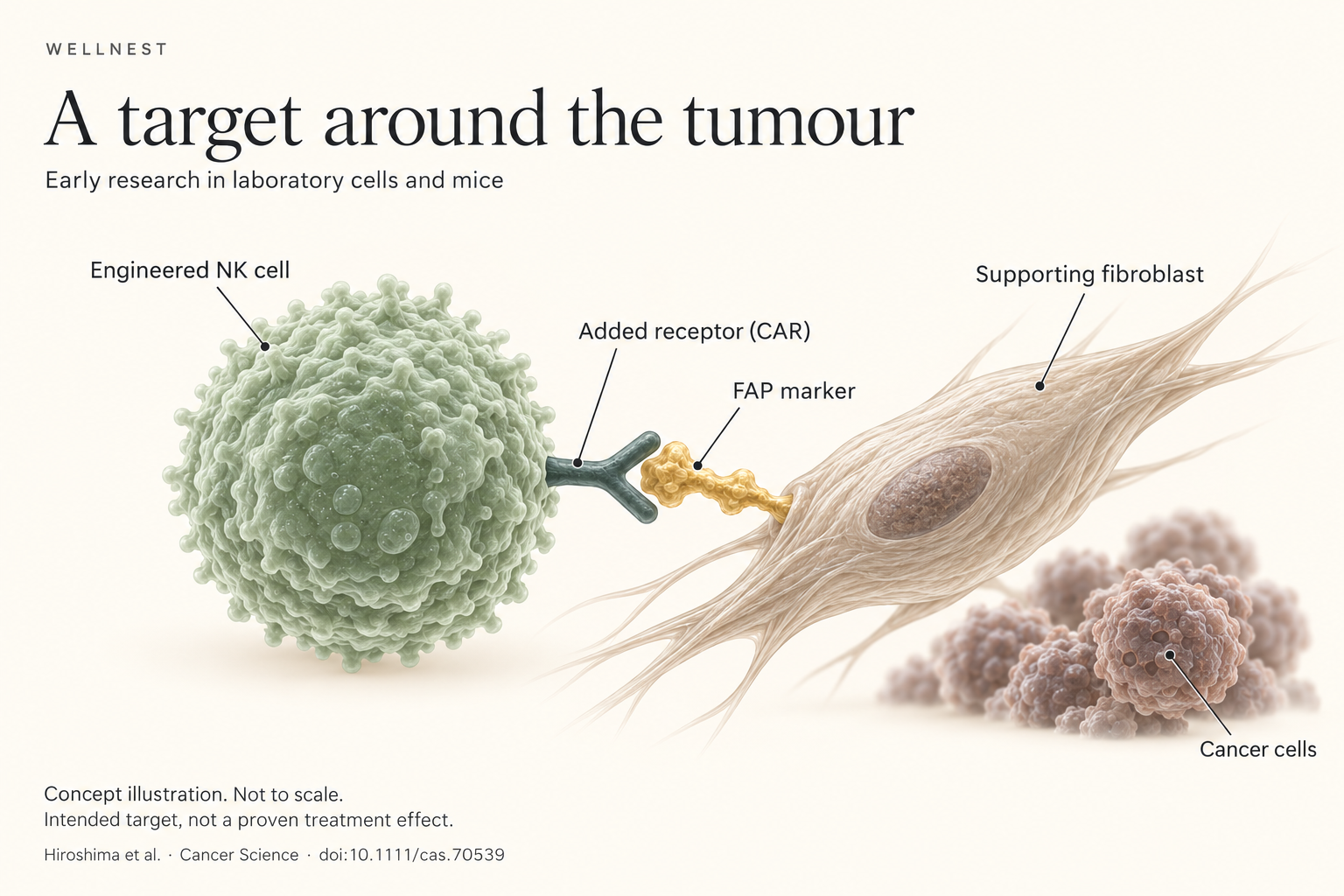
Visual 1. A simplified explanation of the research target. The added receptor recognises FAP on a supporting cell. This illustration shows the intended approach, not a proven treatment effect.
Giving immune cells a new way to recognise their target
Our immune system contains natural killer cells, usually shortened to NK cells. Despite their dramatic name, these are a normal part of the body's defences and can destroy some abnormal cells.
The researchers started with NK cells from donated umbilical cord blood. They added a specially designed receptor: a structure on the cell's surface that helps it recognise a chosen target. This receptor is called a CAR, which stands for chimeric antigen receptor.
You can think of the added receptor as giving the immune cell a new recognition tool. In this case, it was designed to recognise FAP.
That explains the long scientific name, FAP-CAR NK cells: natural killer cells engineered to recognise FAP. The cord blood supplied the starting cells; the experimental product was made by changing and growing those cells in a laboratory.
This sits within the wider field of cancer immunotherapy [2], which uses the immune system to help fight cancer. Different immunotherapies work in different ways. Evidence for one cannot automatically tell us whether another will work.
What worked and what did not
In laboratory dishes, the engineered cells recognised and killed FAP-bearing target cells, including supporting cells grown from human lung tumours. They performed better against these targets than comparison immune cells carrying a receptor aimed at a different marker.
The researchers then tested the approach in mice with human lung cancer cells and tumour-supporting cells placed inside the chest. The mouse model represented spread within the lining of the chest.
The engineered NK cells multiplied and remained detectable about five weeks later. They were found in several places, including the tumours. That matters because keeping engineered immune cells alive inside the body is one of the challenges in developing this type of treatment.
However, the target supporting cells were not cleared. The study did not show a significant reduction in their burden in mice, or a clear improvement in tumour control or survival.
The five-week finding refers to the presence of the engineered cells. It does not mean five extra weeks of life, five weeks of cancer control, or a benefit demonstrated in people.
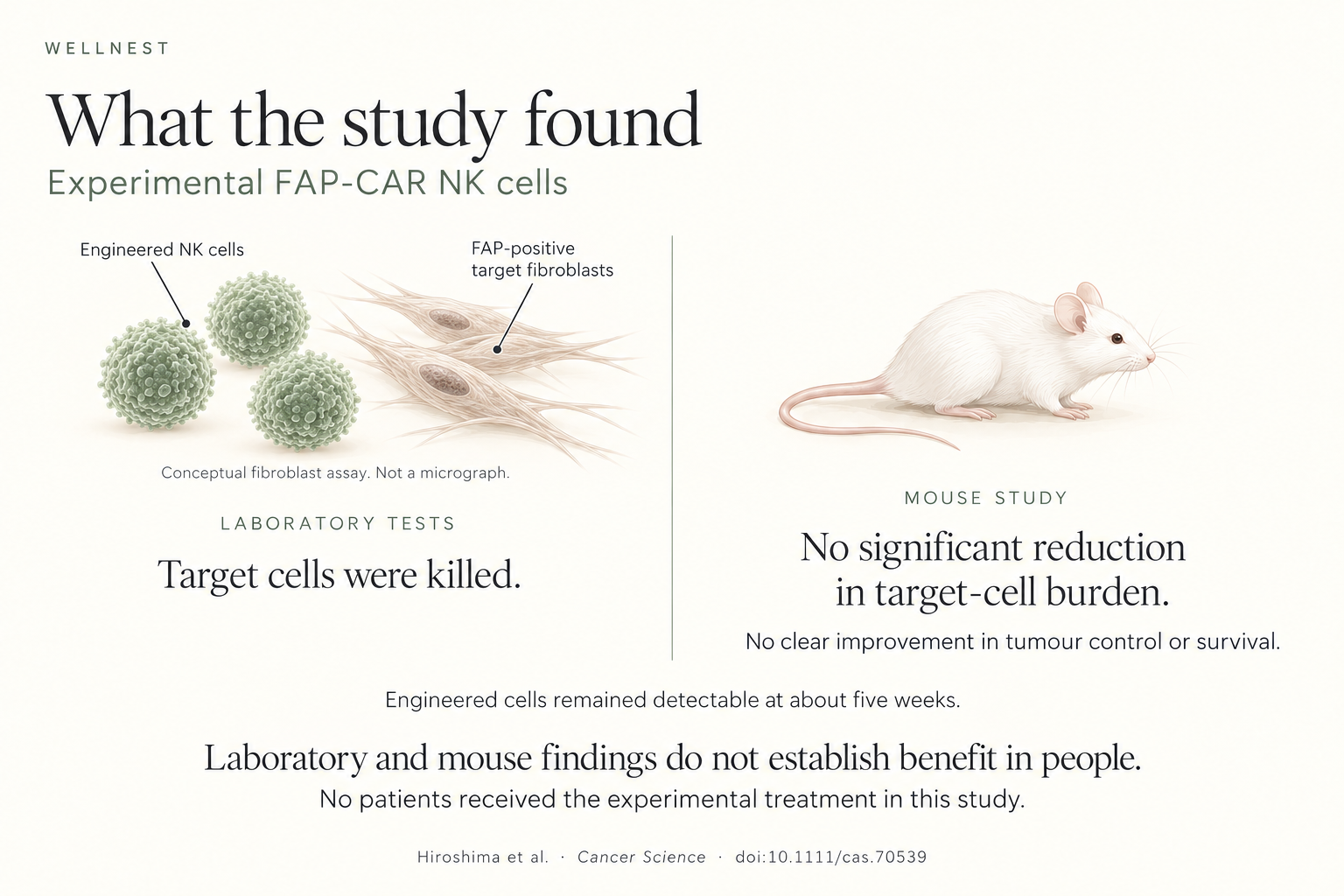
Visual 2. The central finding from the study's Figures 1 and 2 and supplemental Figure S3. Keeping the engineered cells alive and getting them to do their intended job are separate challenges.
Why this still moves the science forward
A treatment made from living cells has several jobs to complete. It must recognise its target, reach it, stay alive and work effectively in the conditions inside a tumour.
This study gives researchers evidence that their cells can recognise the target in a dish and persist in this mouse model. It also reveals a gap: those abilities did not translate into effective target clearance in the animals.
The authors suggest that difficulty reaching individual target cells, or signals in the tumour that hold immune cells back, might help explain the result. These are possible explanations, not answers the study proved.
That gives the next experiments a clearer purpose. Researchers need to understand what prevented the cells from working and whether changes to the approach can overcome it. The advance is a better-tested idea and a more specific problem to solve.
What this means if you are living with lung cancer
This paper cannot tell us whether this experimental approach will be safe or effective for a particular person. The animal groups were small: the main comparison tracking supporting cells involved four treated mice and two comparison groups of three mice each.
The mice also had weakened immune systems, and the supporting-cell cultures came from just two people. These models cannot capture the full variety of human cancers or the complexity of a person's immune system.
Further development and testing would be needed before this particular approach could establish benefit in people. The paper does not provide a timetable for patient access.
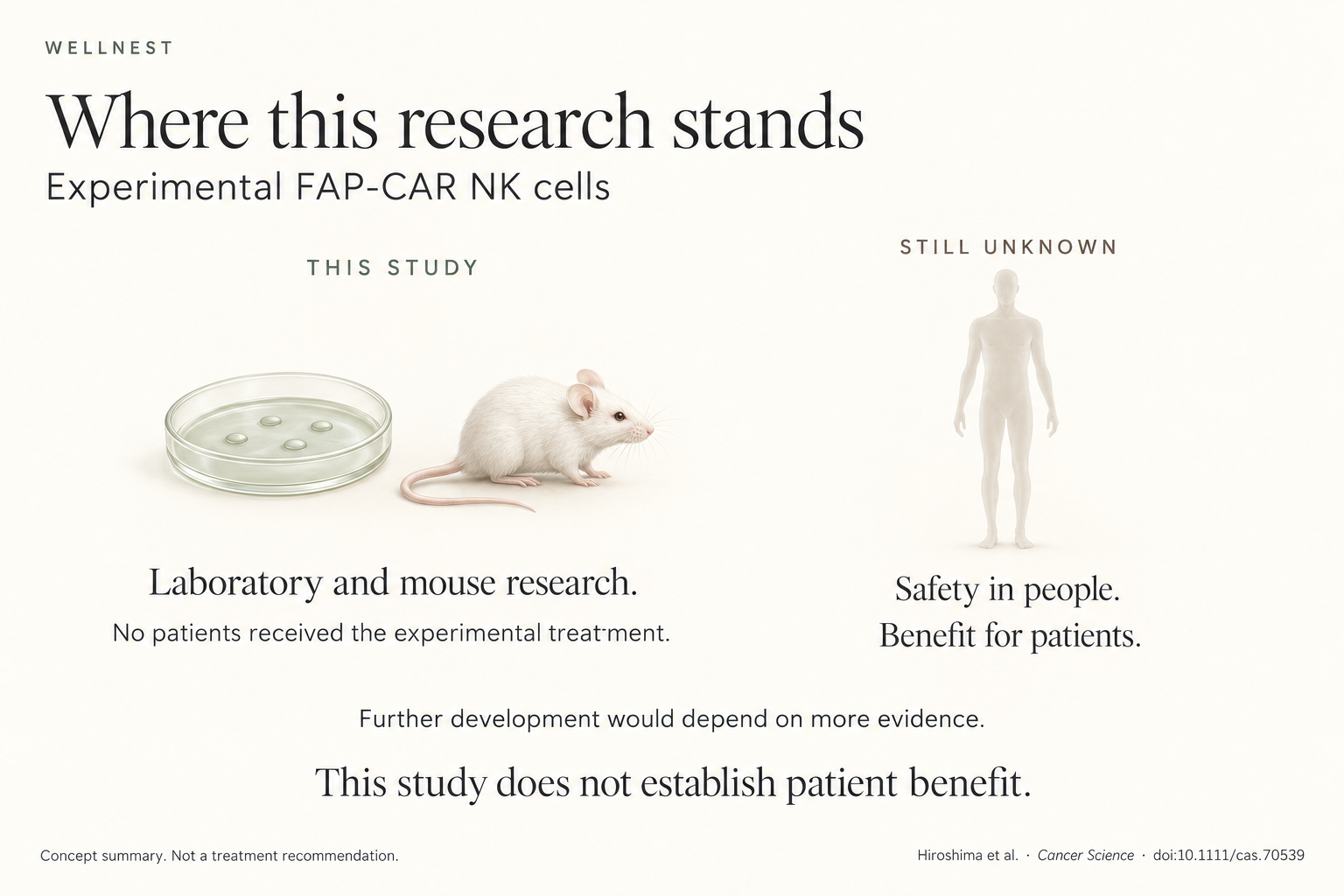
Visual 3. Where the research stands. Later stages depend on successful evidence and review; they are not guaranteed next steps.
For now, useful questions to take to your oncology team include:
Which treatments have evidence for my type and stage of lung cancer?
Are there clinical trials that might suit my situation?
When I read about a new discovery, was it tested in laboratory cells, animals or people?
There is room to feel encouraged by the ingenuity of this work while keeping expectations grounded. Scientists are learning to work with living immune cells in increasingly precise ways. For patients, the milestone that matters will be evidence that those advances help people live longer or better, with acceptable risks.
At WellNest, we believe making research understandable includes explaining both the progress and the unanswered questions. This article is for education and should support a conversation with your oncology team. It is not a reason to change or delay your current care.