



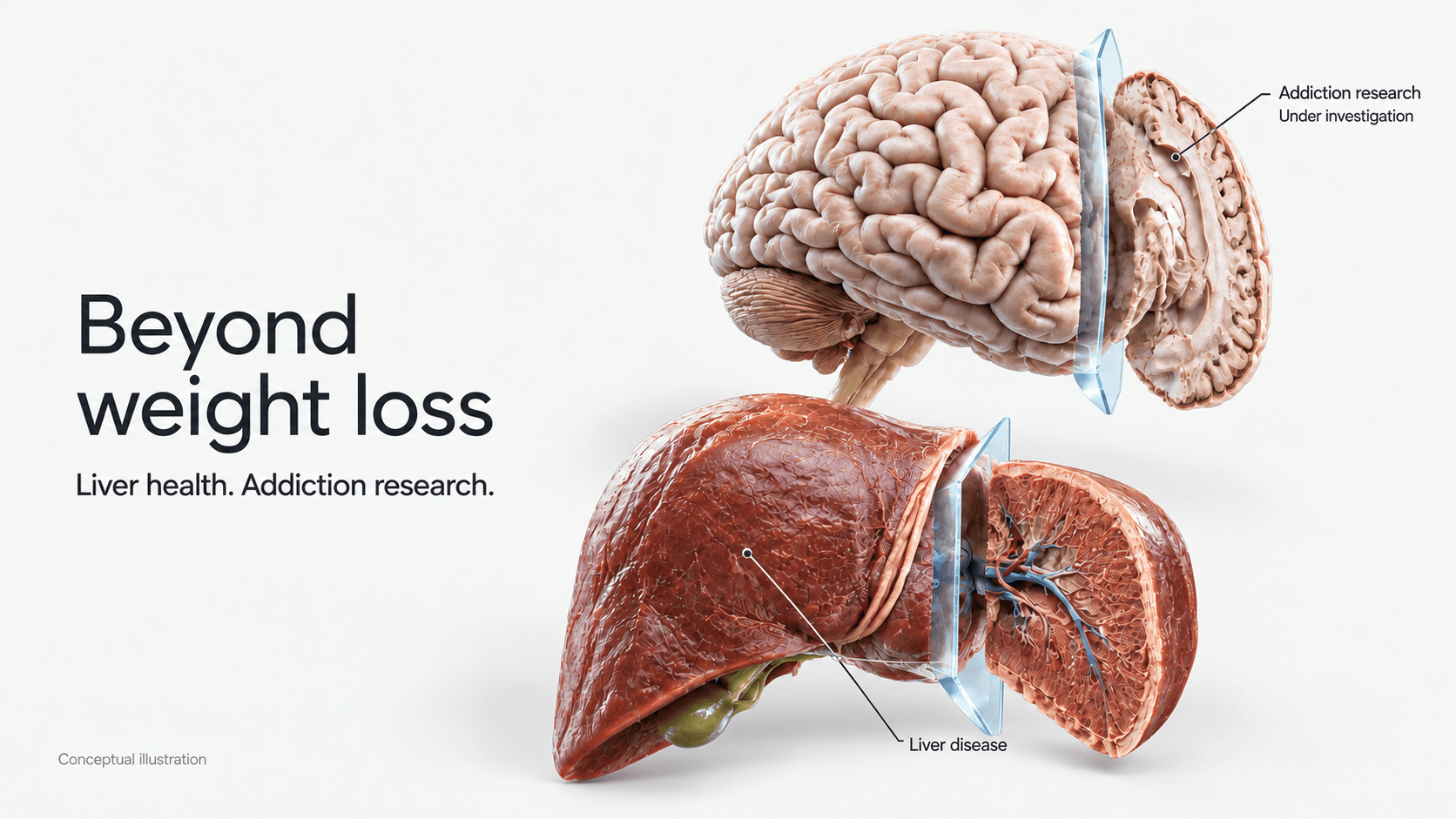
The most important story in metabolic medicine is no longer simply that GLP-1 drugs help people lose weight. It is that a new generation of therapeutic peptides is starting to expose the links between metabolism, inflammation, organ damage and behaviour.
Two developments make that shift visible. A newly registered Phase 2 trial will test tirzepatide in methamphetamine use disorder.[1] Separately, Phase 3 evidence for semaglutide in metabolic dysfunction-associated steatohepatitis (MASH) has already supported an accelerated US approval.[2] One programme is early and exploratory; the other has crossed a regulatory threshold. Taken together, they point to a broader platform of medicine rather than a single obesity category.
What these peptides are
Peptides are short chains of amino acids, the same building blocks used by the body to make proteins. Therapeutic peptides can be designed to imitate, strengthen or extend natural biological signals.
Semaglutide is a 31-amino-acid GLP-1 analogue. It activates the glucagon-like peptide-1 receptor, supporting glucose-dependent insulin release, reducing glucagon, slowing gastric emptying and increasing satiety. Tirzepatide is a 39-amino-acid peptide engineered to activate both GIP and GLP-1 receptors. Both molecules have lipid side chains that help them remain active long enough for once-weekly dosing.
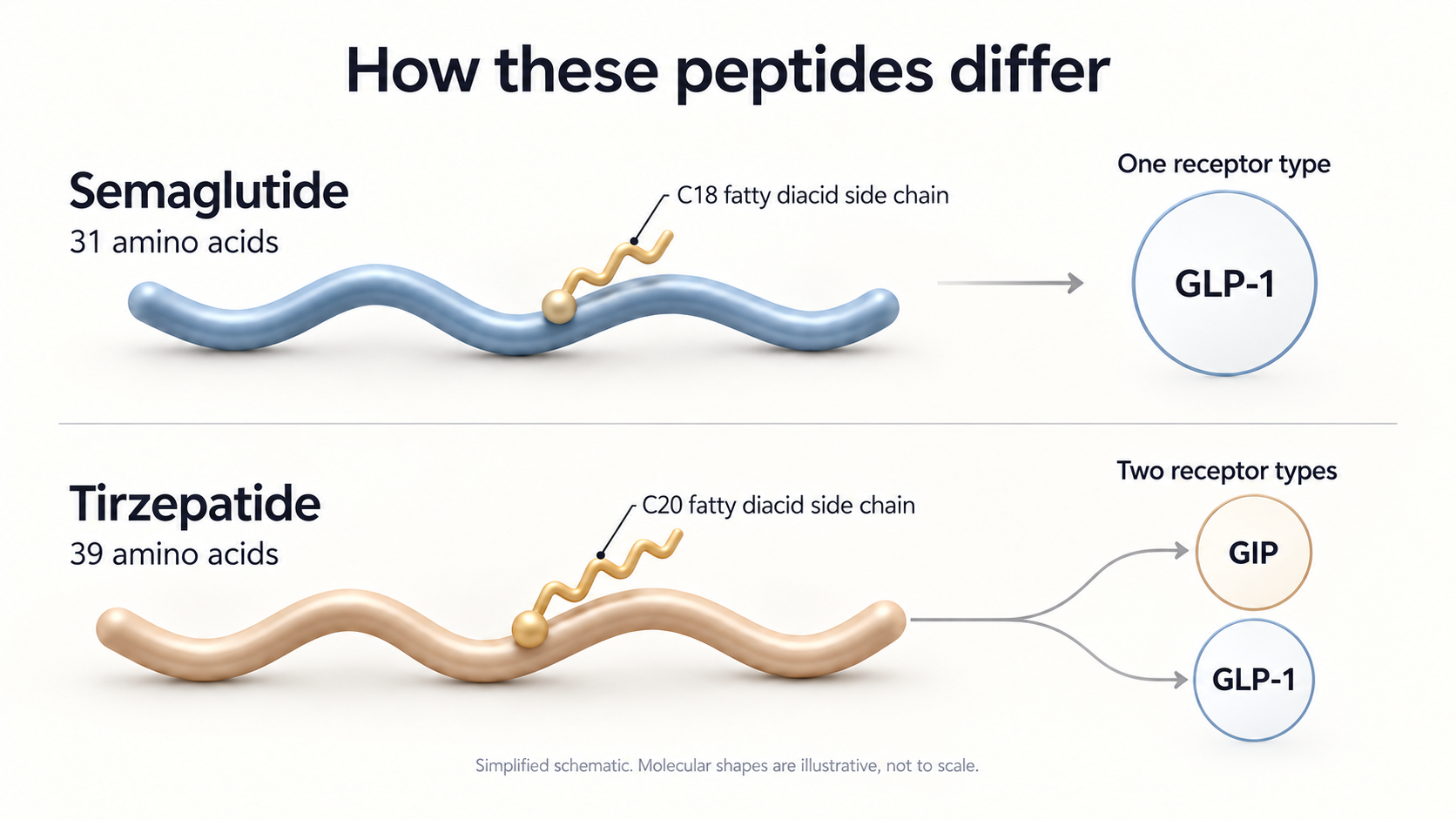
Semaglutide acts on one receptor type, tirzepatide on two. This conceptual schematic uses illustrative molecular shapes, not actual molecular structures or a scale model.
Calling them “weight-loss drugs” is therefore incomplete. Weight reduction is an important outcome, but the underlying biology touches appetite, glucose control, energy balance and, potentially, reward pathways and organ-level inflammation.
The liver signal is now regulatory, not theoretical
In MASH, fat accumulation is accompanied by inflammation and liver-cell injury. Fibrosis, or scarring, may also develop and can progress to cirrhosis, with risks including liver cancer, transplantation or death. It often progresses quietly.
In ESSENCE, an ongoing Phase 3 trial (NCT04822181), adults with biopsy-confirmed MASH and stage F2 or F3 fibrosis were assigned to once-weekly semaglutide 2.4 mg or placebo, alongside standard care.[3] The planned 72-week interim analysis covered the first 800 participants.
The results were meaningful on both co-primary histology measures:[4]
62.9% of participants receiving semaglutide achieved MASH resolution without worsening fibrosis, versus 34.3% with placebo.
36.8% achieved an improvement in fibrosis without worsening MASH, versus 22.4% with placebo.
Mean weight change was -10.5% with semaglutide and -2.0% with placebo.
Gastrointestinal side effects were more common with semaglutide than with placebo.[4]
On 15 August 2025, the US FDA granted accelerated approval to Wegovy (semaglutide 2.4 mg) for adults with noncirrhotic MASH and moderate-to-advanced fibrosis.[2] The word “accelerated” matters. Approval was based on liver histology, a surrogate endpoint. The trial is continuing to 240 weeks to test whether those improvements translate into fewer deaths, transplants and other liver-related events. Completion is expected in 2029.[5]
The balanced conclusion is strong but specific: semaglutide has become the first GLP-1 therapy approved in the US for this defined MASH population, while long-term clinical-outcome confirmation remains outstanding.[5]
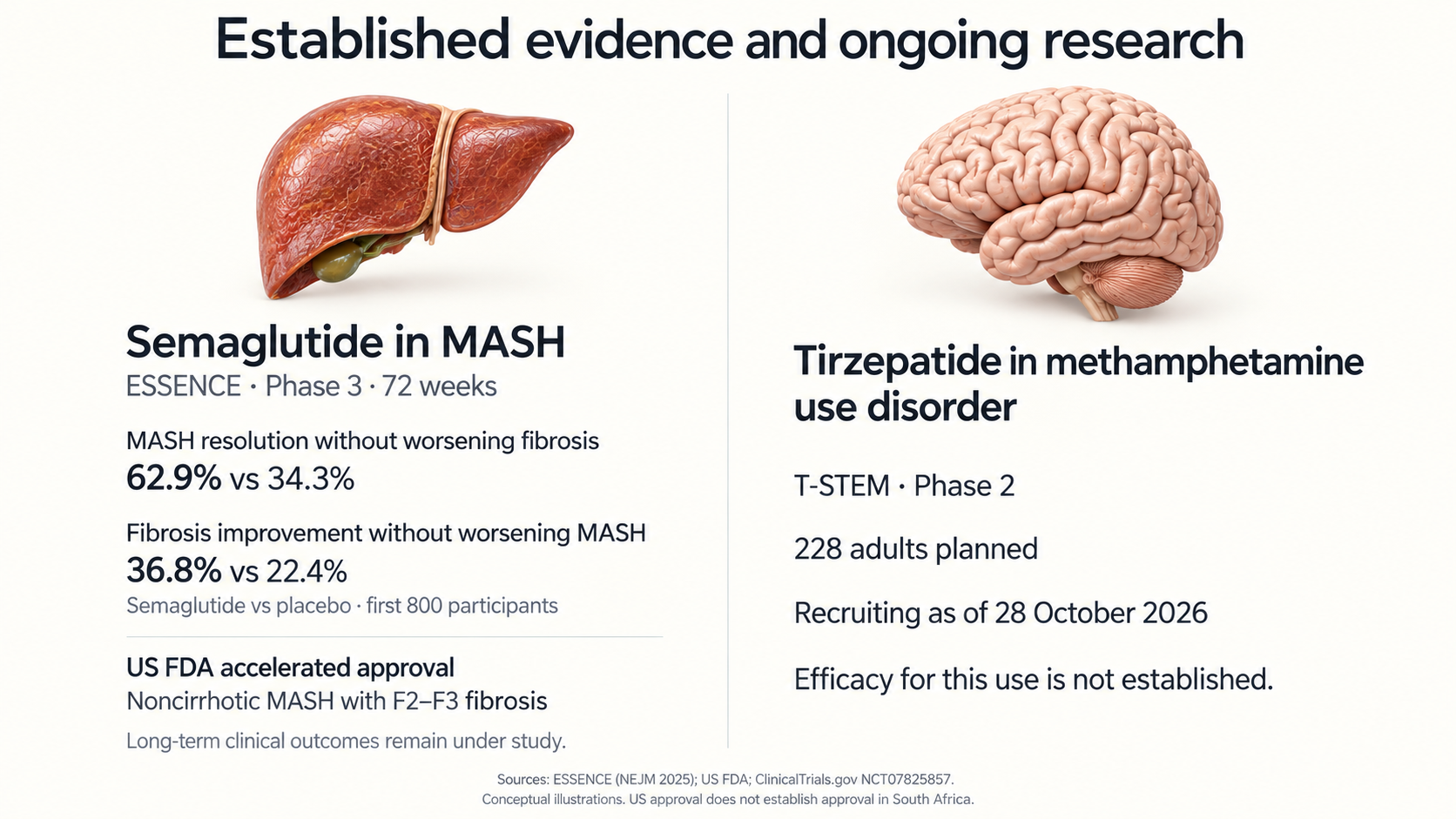
Semaglutide in MASH has US FDA accelerated approval based on interim biopsy results; long-term clinical outcomes remain under study. T-STEM is a Phase 2 trial with 228 adults planned, recruiting as of 28 October 2026; efficacy of tirzepatide for methamphetamine use disorder is not established. Conceptual illustrations; US approval does not establish approval in South Africa.
The addiction study asks a bigger question
The T-STEM trial (NCT07825857), first posted on 17 September 2026, will test tirzepatide in moderate or severe methamphetamine use disorder. The University of Texas Southwestern Medical Center is the sponsor and the US National Institute on Drug Abuse is a collaborator.[1]
The design is a Phase 2, randomised, double-blind, placebo-controlled study with planned enrolment of 228 adults aged 18 to 65 who are also overweight or living with obesity (a body mass index of 25 or more). Participants will receive weekly tirzepatide, titrated from 2.5 mg to as much as 15 mg or the maximum tolerated dose, for 26 weeks, followed by six weeks of follow-up. As of 28 October 2026, the registry lists the study as recruiting, with an actual start date of 23 October 2026. The 228 participants are planned enrolment, not a count already enrolled.[1]
The main measure of success is treatment response, defined as at least six of eight urine drug screens negative for methamphetamine in weeks 23 to 26. Other endpoints include tolerability, serious adverse events, self-reported methamphetamine use, early remission and craving.[1] The trial is not evidence that tirzepatide treats methamphetamine use disorder. It is evidence that the hypothesis has become credible enough for a properly powered randomised test.
That distinction is essential. There is currently no FDA-approved medication for methamphetamine use disorder. The scientific case comes from preclinical and observational signals suggesting GLP-1 receptor pathways may influence stimulant use and craving.[1] A separate, smaller open-label pilot (NCT06745128) is listed as completed on 12 February 2026, with actual enrolment of 35. Its eligibility criteria included moderate or severe methamphetamine use disorder and either obesity (BMI of at least 30) or overweight (BMI of at least 27) with a weight-related condition. Neither registry record had results posted as of 28 October 2026; this does not establish that no preliminary findings exist elsewhere.[6] T-STEM is designed to move the question into a more decisive setting.
Why the two programmes belong in the same conversation
MASH and methamphetamine use disorder look clinically unrelated. One damages the liver; the other is an addiction disorder. But both expose the limits of treating metabolic biology as a narrow matter of body weight.
The emerging model is one of connected systems:
Gut and pancreas: incretin signals shape glucose-dependent insulin release and glucagon.
Brain: satiety and reward circuits may alter appetite and, under investigation, drug craving.
Liver and adipose tissue: weight loss and other mechanisms may reduce fat, inflammation and fibrosis.
Behaviour: weekly therapy may support a longer window in which healthier patterns can take hold, but it does not replace psychological, social or addiction care.
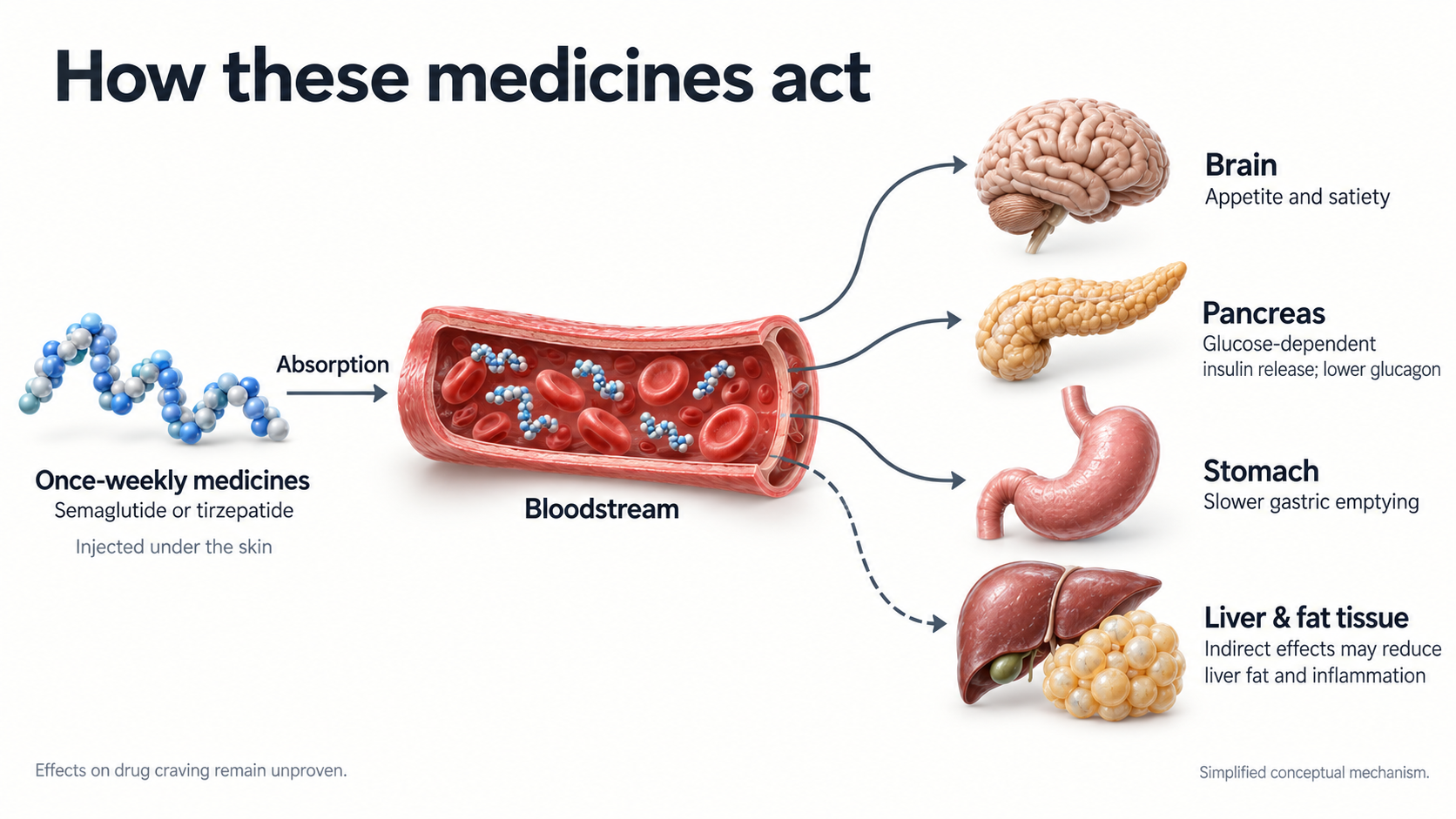
Once-weekly medicines are absorbed into the bloodstream after injection. This simplified conceptual mechanism distinguishes indirect liver and fat-tissue effects with a dashed arrow; effects on drug craving remain unproven.
This is why the next phase of peptide medicine will demand more than prescribing. It will require patient selection, diagnostics, muscle and nutrition protection, side-effect management, behaviour change and long-term follow-up.
The thought-leadership opportunity
For health systems and longevity providers, the strategic question is not “Which injection wins?” It is “How do we build the clinical operating system around this biology?”
That operating system should include:
earlier identification of metabolic and liver risk;
precise eligibility and contraindication screening;
measurement beyond the scale, including glycaemia, body composition, liver markers and function;
behavioural and mental-health support;
clear separation between approved indications and investigational uses; and
evidence review that continues after launch, especially where approval depends on surrogate endpoints.
Therapeutic peptides are beginning to move medicine from isolated disease labels toward connected metabolic pathways. Semaglutide in MASH shows that this can change regulatory practice. Tirzepatide in methamphetamine use disorder tests how much further the biology might travel.
The opportunity is substantial. So is the responsibility to communicate the evidence without getting ahead of it.
Editorial note: This article is for general information, not medical advice. Tirzepatide is investigational for methamphetamine use disorder and is not approved for that use. Product labels and local approvals vary by country.