




Opening a jar or carrying a bag of groceries takes grip strength. If everyday tasks like these start to feel harder, it is worth mentioning at your next consultation.
Measuring grip strength offers a simple starting point for discussing strength and tracking changes over time.
AI-generated illustrative scene; not an actual patient.
Why grip strength matters
Research suggests that grip strength can provide useful information about health and physical function as we age.
The South African HAALSI study followed 5,059 adults aged 40 and older in a rural community. Lower grip strength was associated with a higher risk of death during follow-up. It was one of several factors examined, not a stand-alone prediction of someone's future. [1]
A separate study followed Japanese-American men for approximately 25 years. Those with weaker grips in midlife were more likely to have physical limitations later, including difficulty rising from a chair without using their arms. [2]
These findings describe patterns across groups of people. A grip score cannot tell you how long you will live, and these studies did not test whether grip exercises add years to life.
What happens during the test?
Your clinician adjusts the handle of the InBody InGrip to fit your hand. You squeeze it with each hand in turn, and the device records the force you produce.
Before starting, mention any pain, injury or surgery affecting your hand, wrist or arm.
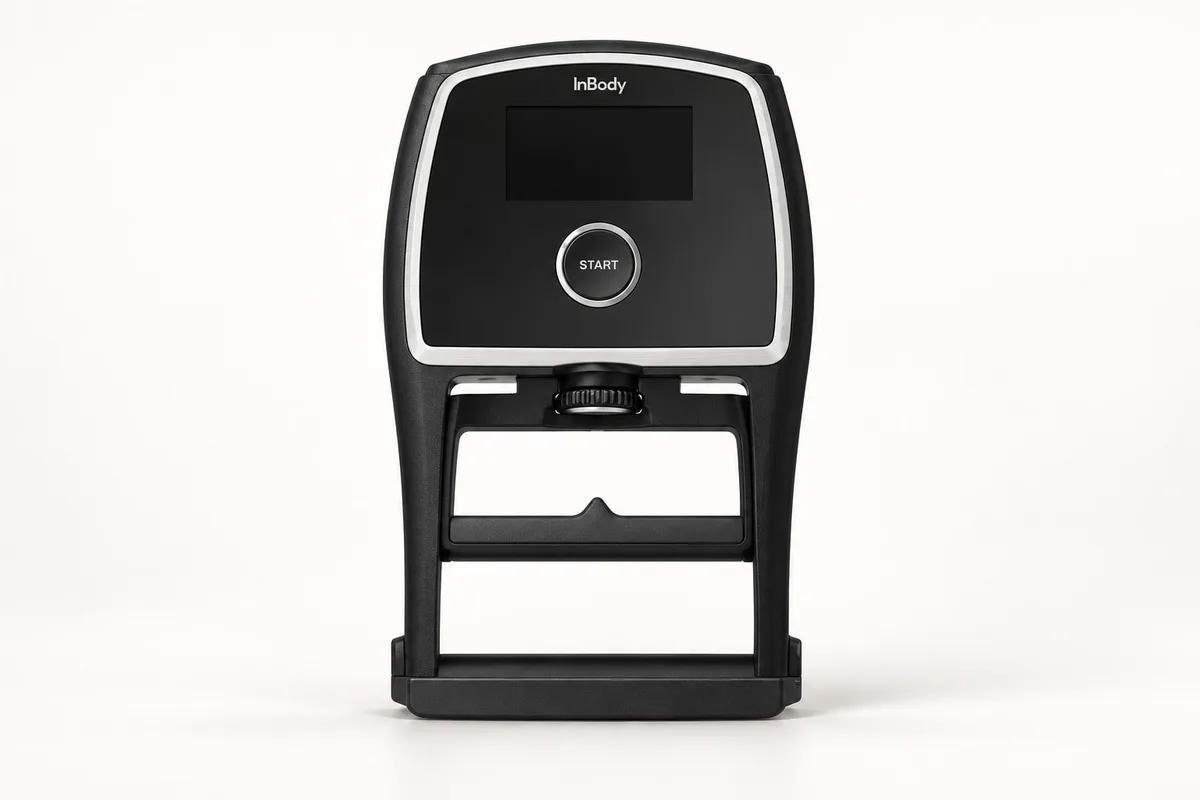
AI-generated reference-based product illustration; not an actual device photograph or test result.
The InGrip test helps us:
Measure grip strength
Establish a baseline
Track changes over time
Using your result over time
InGrip measures strength, while InBody estimates body composition. We interpret these alongside your health history and daily function. Repeating the test using the same method helps us track changes more meaningfully.
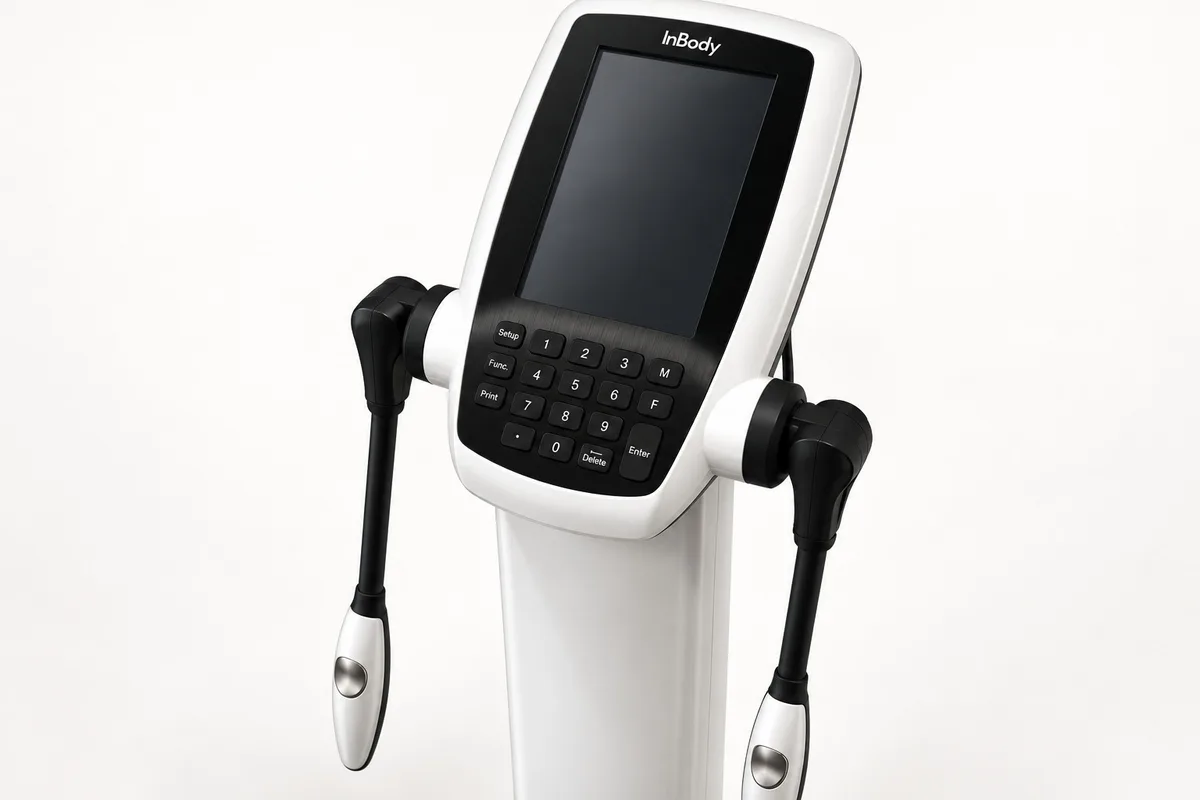
AI-generated reference-based product illustration; not an actual device photograph or test result.
An InBody scan helps us:
Estimate muscle mass
Estimate body fat
Estimate body water
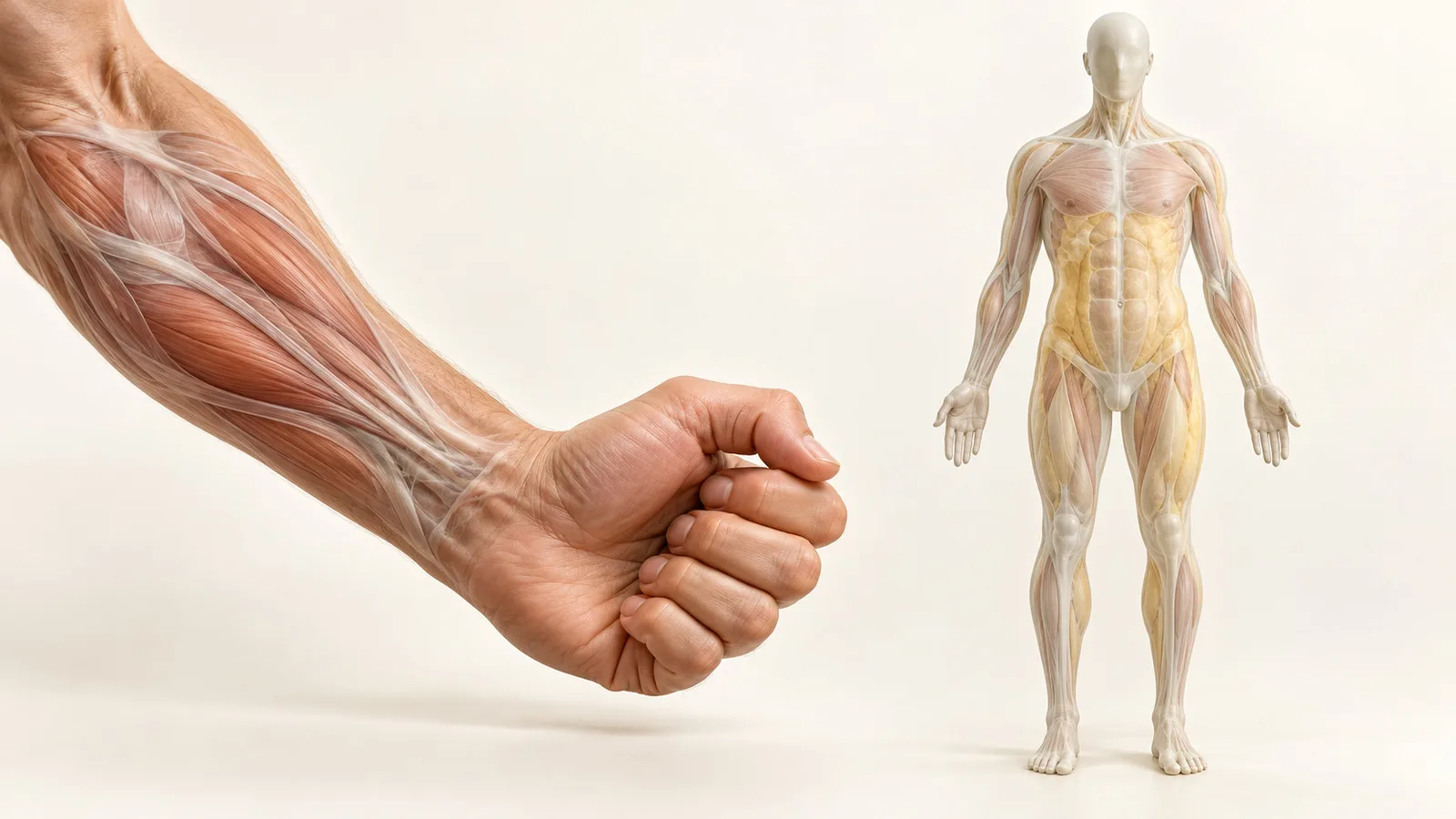
AI-generated conceptual illustration; not a device image, scan or test result. Left: InGrip measures strength. Right: InBody estimates body composition.
Your first reading provides a baseline for future comparison.
Pain, effort and testing technique can affect a reading, so one lower result does not automatically mean your health has declined.
If everyday tasks become harder, or a repeat reading is lower, you and your clinician can discuss what has changed and whether it needs further assessment or an adjustment to your strength routine.
The aim is to make changes easier to notice and discuss, with your result considered alongside how you feel and function.
This article provides general information and does not replace individual medical advice.